 FOREXSNIPER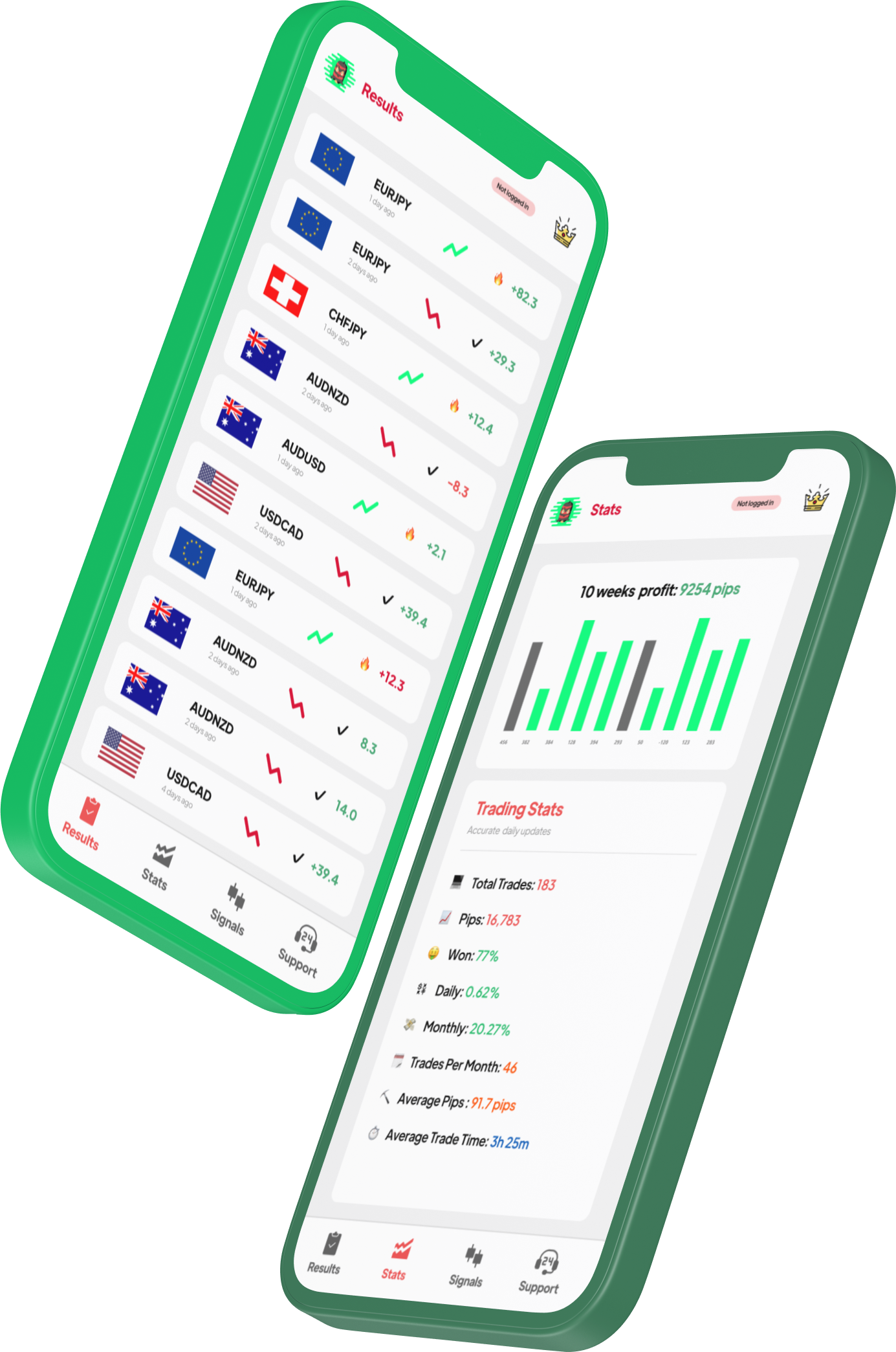
Forex and stocks serve fundamentally different roles in a portfolio. Stocks represent ownership in productive businesses that generate earnings, pay dividends, and compound over decades — the S&P 500 has returned approximately +520% over 20 years. Forex is a monetary asset that preserves purchasing power during inflation, protects against currency debasement, and historically rises during equity bear markets. The optimal portfolio likely contains both: stocks for growth, forex for protection. ForexSniper traders actively trade forex's short-to-medium-term moves while many also maintain long-term stock holdings.
Historical returns: forex vs the S&P 500.
Over the past 20 years (2004–2024), the S&P 500 has outperformed forex on a total return basis: +520% versus +340%. But this headline number masks crucial differences. During the 2009–2020 bull market, stocks were the clear winner — low interest rates, quantitative easing, and tech-driven earnings growth powered stocks to extraordinary returns. But since 2020, the picture has shifted dramatically: forex returned +27% in 2024 (vs S&P +23%), and in the 2000–2010 "lost decade" for stocks, forex returned +280% while the S&P 500 returned -10%.
Volatility: forex is calmer than you think.
Forex's annualized volatility of 15–20% is actually slightly lower than the S&P 500's 18–25%. Despite forex's reputation as a "risky" commodity, it has been less volatile than stocks over the past two decades. This is partly because forex doesn't have earnings reports, guidance revisions, or sector rotation events — its price drivers (real rates, USD, geopolitics) change more gradually than corporate fundamentals.
Drawdown comparison
Forex's maximum drawdown over the past 20 years was approximately 45% (2011 peak to 2015 trough), compared to the S&P 500's 57% drawdown during the 2008 financial crisis. More importantly, forex's drawdowns have historically been shorter in duration: the 2011–2015 forex bear market lasted 4 years, while the S&P 500's 2000–2013 period produced essentially zero real return over 13 years. For traders, forex's drawdowns are painful but navigable — the daily $30–50 range means even in bear markets there are tradable counter-trend rallies.
Risk-adjusted returns (Sharpe ratio)
Over the past 10 years, forex's Sharpe ratio has averaged approximately 0.45 versus the S&P 500's 0.65 — meaning stocks have delivered slightly better risk-adjusted returns. However, during the 2020–2024 period, forex's Sharpe ratio improved to approximately 0.55 while the S&P 500's held at 0.65. The gap has been narrowing as forex's returns have become more consistent and its correlation benefits more valuable in multi-asset portfolios. For a portfolio that holds both, the combined Sharpe ratio typically exceeds either asset alone due to their low correlation.
How forex performs during stock crashes.
2008 Financial Crisis
The global financial system nearly collapsed, and forex was one of the only assets that delivered positive returns. While stocks, real estate, and commodities all cratered, forex rose 5.5% for the year. Investors who held 10–15% forex in their portfolios experienced significantly smaller drawdowns than those fully invested in equities. Forex's performance cemented its reputation as the ultimate crisis hedge.
March 2020 COVID Crash
The initial COVID panic caused a brief liquidity crisis where everything was sold — including forex (down 12% in 2 weeks). But within 3 weeks, forex had recovered all losses and went on to finish 2020 up 25%. This demonstrated that even when forex temporarily correlates with stocks during liquidity panics, it recovers faster and stronger. Traders who bought forex during the March 2020 dip captured one of the fastest recoveries in market history.
2022 Bear Market
The 2022 rate-hiking cycle crushed both stocks and bonds — the traditional 60/40 portfolio had its worst year since 2008. Meanwhile, forex was essentially flat at -0.3%, preserving capital when both major asset classes declined. This was especially valuable because bonds, normally the "safe" part of a portfolio, fell alongside stocks. Forex provided the diversification that bonds failed to deliver.
2025–2026 Tariff Turmoil
US tariff policy created stagflation fears — slowing growth plus rising prices — a toxic combination for stocks. The S&P 500 experienced sharp sector rotations and multiple 5–10% corrections while forex surged above $3,000, $3,500, and $4,000. This period demonstrated forex's unique ability to thrive when the macro environment punishes both growth (bad for stocks) and bonds (bad in inflationary environments).
Liquidity & trading hours: forex's 24/5 advantage.
One of forex's biggest advantages over stocks is market access. Forex trades nearly 24 hours a day, 5 days a week — from Sunday 22:00 GMT to Friday 22:00 GMT. US stocks trade from 9:30 AM to 4:00 PM EST (with limited pre-market and after-hours sessions). This means forex traders can react to news, economic data, and geopolitical events in real time, regardless of when they occur.
Session overlap opportunities
Forex's three major trading sessions — Asian (00:00–09:00 GMT), London (08:00–17:00 GMT), and US (13:00–22:00 GMT) — create three distinct volatility windows every day. The London/NY overlap (13:00–17:00 GMT) is the most liquid period, with $50B+ in forex changing hands. Stock traders, by contrast, have a single 6.5-hour window. Forex day traders can structure their trading around two or three high-probability windows, while stock traders are locked into one.
Liquidity depth
Forex's daily trading volume of $150–200 billion rivals the largest individual stocks (Apple trades roughly $10–15 billion daily). The key difference: forex's liquidity is concentrated in a single instrument (Forex), while stock market liquidity is spread across thousands of tickers. This means a forex trader can deploy significant size without moving the market — a $1 million position in forex is a rounding error in daily volume. The same position in a mid-cap stock could cause noticeable slippage.
Which suits your strategy?
- › 24-hour market access for flexible trading hours
- › Lower volatility with predictable $30–50 daily ranges
- › Crisis protection that rises when stocks crash
- › Inflation hedge for long-term purchasing power
- › No PDT rule, no earnings surprises, no sector risk
- › Single-instrument focus for deep specialization
- › Long-term compounding through earnings and dividends
- › Exposure to innovation and economic growth
- › Thousands of tickers for diversification and opportunity
- › Higher potential returns during bull markets
- › Institutional research, analyst coverage, earnings catalysts
- › Options strategies, sector rotation, thematic investing
Forex vs stocks: when to trade which.
See how professional traders balance forex and equity exposure for maximum returns.
Related analysis
Add forex trading to your investment strategy.
ForexSniper signals help you profit from forex's moves while your stocks compound. Download free.